

Building Brand and Culture for Customer Success With Liz Fritz

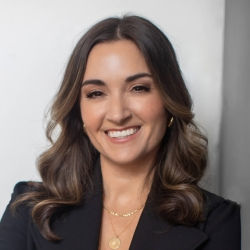
Liz Fritz is the Co-Founder of F2 Strategy, a leading wealthtech consulting firm that helps wealth and asset management companies make better technology and business decisions. She is a seasoned marketing executive with nearly two decades of experience in the financial services industry, including leadership roles at prominent firms such as Wells Fargo, US Bank, and BNP Paribas. Liz specializes in brand strategy, marketing, and culture development, helping organizations translate strategy into growth and enterprise value. She is also a frequent industry speaker and advocate for advancing women in the wealthtech space.
Here’s a glimpse of what you’ll learn:
[02:04] Liz Fritz discusses how F2 Strategy helps executives make better technology decisions
[03:44] Impact of COVID on accelerating tech adoption in financial services
[06:53] Connection between brand, customer experience, and trust
[08:33] Importance of defining your target audience and a clear company purpose early
[15:10] Liz talks about using a core mission as a decision-making lightning rod for growth
[17:47] Relationship between brand and company culture in scaling a business
[22:34] Challenges wealth management firms face in differentiating their brand
[26:49] AI trends in financial services and marketing strategy shifts
In this episode…
Many firms struggle to balance technology adoption with maintaining strong human relationships and a clear brand identity. As tools evolve rapidly, especially with AI, businesses risk implementing technology for its own sake rather than enhancing customer experience and trust. How can organizations use technology strategically while staying authentic and customer-focused?
Liz Fritz, a marketing executive and wealth management expert, explains that success starts with clarity of purpose and a deep understanding of the customer. She emphasizes defining a core mission to guide decisions, focusing on a specific target audience, and building an authentic brand that reflects both internal culture and external experience. Liz highlights that technology should streamline operations and free teams to build relationships, while consistent thought leadership, content, and credibility signals help businesses stand out — especially in an AI-driven search environment.
In this episode of The Customer Wins, Richard Walker interviews Liz Fritz, Co-Founder of F2 Strategy, about building authentic brands and leveraging technology for growth. Liz discusses defining a clear purpose, aligning culture with brand, and using AI-driven marketing. She also shares insights on niche targeting, thought leadership, and creating trust-driven customer experiences.
Resources Mentioned in this episode
Quotable Moments:
“Technology is there to actually take off some of that operational burden and time and give it back.”
“People buy from people, and people buy from people that they trust.”
“Having clarity and authenticity around your brand from day one is so, so core.”
“Don’t waste your time trying to serve everybody, figure out who you are, who you serve.”
“You don’t need a multimillion-dollar budget, but you really do need to understand who you are.”
Action Steps:
Define a clear core mission early: Establishing a single guiding purpose helps align decisions, messaging, and growth strategies across the organization, ensuring teams stay focused and attract the right customers.
Narrow your target audience: Identifying exactly who you serve allows you to create more relevant messaging and stronger connections while preventing wasted resources on broad, ineffective marketing efforts.
Build an authentic brand from day one: A clear and genuine brand creates trust with both customers and employees while forming a foundation for long-term relationships and sustainable growth.
Use technology to enhance human connection: Implementing tech with intention frees up time for deeper client relationships while ensuring tools support people rather than replace meaningful interactions.
Invest in thought leadership and content: Sharing insights through speaking, writing, and media builds credibility and visibility while positioning you as a trusted expert in an AI-driven landscape.
Sponsor for this episode...
This is brought to you by Quik!
At Quik!, we provide forms automation and management solutions for companies seeking to maximize their potential productivity.
Using our FormXtract API, you can submit your completed forms and get clean, context-rich data that is 99.9% accurate.
Our vision is to become the leading forms automation company by making paperwork the easiest part of every transaction.
Meanwhile, our mission is to help the top firms in the financial industry raise their bottom line by streamlining the customer experience with automated, convenient solutions.
Go to www.quickforms.com to learn more, or contact us with questions at support@quikforms.com.
Powered by Rise25 Podcast Production Company
Episode Transcript:
Intro: 00:02
Welcome to The Customer Wins podcast, where business leaders discuss their secrets and techniques for helping their customers succeed and, in turn, grow their business.
Richard Walker: 00:16
Hi, I'm Rich Walker, the host of The Customer Wins, where I talk to business leaders about how they help their customers win and how their focus on customer experience leads to growth. Some of my past guests have included Adrian Johnstone of Practifi, Jason Early of RISR, and Brian Portnoy of Shaping Wealth. Today, I got to speak with Liz Fritz, the co-founder of F2 Strategy, and today's episode is brought to you by Quik!, the leader in enterprise forms processing. When your business relies upon processing forms, don't waste your team's valuable time manually reviewing the forms. Instead, get Quik!.
Using Quik!, you'll be able to generate completed forms and get back clean. context-rich data that reduces manual reviews to only one out of 1000 submissions. Visit quickforms.com to get started. All right. Today's guest, Liz Fritz, is a tenured marketing executive and co-founder of F2 Strategy, the largest pure play wealth tech consulting firm in the US.
As a former corporate marketer, Liz offers unique expertise in the entrepreneurial and M&A space. Through her experience successfully translated her in-house marketing communications knowledge into growing F2 enterprise value with strategic marketing, brand strategy, and culture development. Liz is a frequent speaker at industry events and a vocal advocate for supporting and lifting women in this space, which I love. Liz, welcome to The Customer Wins.
Liz Fritz: 01:43
Thanks so much. Thank you for having me, Rich.
Richard Walker: 01:46
I'm really excited to get your perspective today. So for those who haven't heard my show before, I just love to talk to business leaders about what they're doing to help their customers win, how they build and deliver a great customer experience, and the challenges to growing their own company. So, Liz, I want to get to know your business a lot better. How does your company help people?
Liz Fritz: 02:04
Oh, thanks so much. So F2 Strategy, as you mentioned, we're, I think, the largest pure play wealth and asset management consultancy in the space. So it's super exciting. Lots of growth. Recently our goal has always been simple, rich.
From day one, we help Doug and I, my co-founder and my husband, partner in crime, help executives make great decisions when it comes to technology. And the real core root of that mission, Rich, is that technology enables deeper human connection. Sometimes we get a little bit. As a Silicon Valley native girl, I get a little bit overwhelmed with the amount of technology and the headlines about technology isolating us. We actually came at this completely differently in our space because we truly feel like advisors didn't come in to work with technology advisors come into this industry to work with people.
And technology is there to actually take off some of that operational burden and time and give it back so they really can dive into their passion, connecting with their clients and prospects, learning about their financial legacy and helping their clients get there. So that's what we do at F2.
Richard Walker: 03:13
I love that you put it that way, because early on, I was teaching people about how to create an efficient office and everybody thinks, oh, tech, I will get this thing that makes me so much better. And I, I don't see it that way at all. You've got to start with people who are the people, what are their roles? What's their capabilities? Then you start the process.
What are they doing? How do they apply skills? And then technology is just a solution. It's just an enabler. So exactly is that how you frame it?
And then how do you get your customers to change their thinking around this?
Liz Fritz: 03:44
Well, it was really interesting back around right around 2020 when Covid hit. It was a real eye-opener. I think for our industry. It was, you know, Doug and I founded F2 Strategy ten years ago as of April 1st, which the fact that it's April Fool's Day does not. We understand that.
But ten years ago. And when Covid hit, one of the silver linings, which was that it really made people in our industry depend on technology, right? There's always been this push and pull around technology, confidentiality, regulations, security, all these things that have just made our industry travel a little bit slower down that technology path. And Covid really forced us into that. Right.
Advisors were meeting with their clients on Zoom platforms, events marketing was being translated into all digital from maybe paper in the past. And so it's been fascinating to see and, and to see like, wow, we can actually do exactly what you said, which is we can actually use it to streamline our operational systems. So we help our clients put those systems in place. You know, tech for tech's sake is not great tech, making sure that you're building the right pipes and infrastructure of your organization. That tech can then streamline so that your advisors and your people are doing what people do best, which is build trust, build relationships, and take care of their clients.
Richard Walker: 05:10
Yeah. You know, there's so many bad things about Covid, but I'm so grateful for just being able to be on video.
Liz Fritz: 05:17
Exactly.
Richard Walker: 05:18
Pre-COVID, I kept saying, hey, we got to get on the video team. We should get on video. And even though we had like half our team remote, we still did not do video. 100% of my sales were done with black screens. Yeah.
Liz Fritz: 05:31
Yes. And I remember my early days at Wells Fargo and BNP Paribas and it was a big deal. Do you remember what it was like during a teleconference? Right. This was one video call with your Paris office and you had to schedule it and reserve it.
And it was really expensive. And you all went into this one conference room, whereas now we're connected all the time. I just to me, that's beautiful and to, you know, creates space for deeper human connection. I hope many of us now are weaving that into more of a hybrid space where we get real time as well, but you can just fluidly connect with someone like you and I and have a great conversation. And we didn't have to fly to meet, right?
You're in Texas, I'm in Chicago, and we get to have this great conversation now.
Richard Walker: 06:12
I know, I love that, I love that convenience. And I was also just it was, it was incredibly impressive how fast people moved to tech and reliance on tech. I mean, like digital signatures took off. It was already being adopted, but it just took off because people didn't want to touch envelopes that might have been licked by somebody, you know. Right.
But, you know, I think, I think that a lot of people forget that tech is fundamentally about this connection with people. And I'm going to jump several steps ahead here because I also happen to know you love brands. And I think the brand is very much around what you promise people. So how does this connect for you with tech and, and brand and people, etc.?
Liz Fritz: 06:53
I love that question. I'm a brand woman. I formerly liked the legacy CMO of F2. I built the brand from the ground up, literally. I'm really passionate about brand, brand for value brand and people, brand about trust.
And so to me, when we first got connected to Rich, I was so excited because to me, brand is the fundamental foundation or sometimes I refer to it as the spine of your customer journey. Your client journey. Building, building your brand intentionally early on and having it be really authentic allows you to then create this living brand that should touch your customer and your clients every touchpoint of the way. As you grow and add employees to your, to your company, your team's growing. They're all living that brand and that customer journey actually becomes your brand in real life.
Building trust around this authentic service that you're providing, right? So we talked early on about service. Your company provides a service. My company provides a service that people buy from people, and people buy from people that they trust. And so to me, having a brand, it can grow and evolve.
But having clarity and authenticity around your brand from day one, from early days is so, so core to creating a really beautiful and sustainable and scalable client experience.
Richard Walker: 08:15
All right, Liz, I started my company with a very similar intention and I can articulate it from my viewpoint. I really want to hear how you started with that core intention. Like what did brand mean to you on day one and how did that translate to activity and putting it in place? What did you do?
Liz Fritz: 08:33
So it's fascinating. So I founded F2 Strategy on April 1st 2016. I was in a big corporate marketing job in San Francisco doing the commute, I call it like the soul sucking commute over the Golden Gate Bridge. Our little boys were, I think, nine months old and almost three. They're now 11 and 13.
So we've been at this for a while. And I had this was pre-COVID, right? So I had never experienced life a different way. I never knew you could do work a different way. You could work from home.
Like all this was completely new to me. And so Doug's background is really tech centric. He's former CTO of First Republic back in the day, Wells Fargo. He's the, the tech brain, the builder, the, the, the, I said he's the techie guy, the geek squad of F2. I'm a marketer who grew up in the same industry.
We met in the same industry. So we came from wealth management and financial services. So I came on to F2. And my background, like you said, was brand marketing, PR, content, social media. That was my space.
I had done a chunk of my tenure also on the sales side. So I was really passionate about this intersection between client relationships because I had managed books of business and the wealth management space, but then marrying that with my passion, which is the creative, the brand, the writing, the messaging and the storytelling. And so obviously Doug's like, I named this F2 because you're going to join and, and, and I saw him do work a different way. Again, like helping our peers make great decisions. And so I joined about six months later, I just jumped ship, joined and really dug into the brand.
Well, as you know, in a brand new company, we didn't have any marketing budget. Not at all. You know, it's just here's Liz and now she's building a brand. And so it was really important for us to understand who we were in the early days and who we served, because we didn't have the time or money to waste any of that. Right?
So it's like, okay, early days, who are we going to serve? Like you said, we're helping the tech executives at, well, firms make great decisions. That's the CTO, COO, sometimes the CEO of a smaller firm, that's our, that's our market. We're not talking to anybody else. So it's really about fine tuning who we serve.
And it was great because Doug spoke the tech language. I spoke the marketing language, but in reality they're the same questions you should ask yourself as a firm: who are we? Who do we serve? Really fine tuning that demographic. And so from day one, we focused on who we're serving and what we do.
We help them make great decisions about technology, right? And this was pre-COVID. So that looked a little bit different. There was an AI-like boom back then. It was, you know, people were going a little bit slower.
And I really dug into that. We help people make great decisions, which is we provide thought leadership to help you make great decisions. So writing, talking, speaking, speaking on podcasts, speaking at any conference I could get into, I found early days that if you can speak at a conference, you don't get the registration free discounted, right? So I'm like, that's, I'm going to get Doug on stage or me on stage, like at every conference, because we didn't have a sponsorship budget to get on stage or to host panels. And so it was really intentional or like candidly, because of scarcity, we didn't have the luxury to mess up.
We had to be very clear and articulate and take every step, had to be both efficient, low budget or no budget and aligned with our mission, which was to help people. And in that space, Doug was coming out of an area where he wanted to be the solution that he wished he and his peers had when he sat as the CTO. So the authenticity around like, I am you, I was you. And I'm going to not comply anymore. I can tell you all the real deal, right?
My mistakes, my blunders to really help you along the way so that the brand beyond look and feel, you know, we could talk about that a little bit more, but it was really about authenticity, knowing who we were and doing it from day one. I mean, I joined six months later. Doug was like, you have to join. We can't do any of this without the fundamentals of a brand backbone because he's married to a marketer. And I was, you know, singing that tune from day one.
And so it was this natural evolution around that. But I think authenticity is really, really core and being we had to do it because of scarcity. But I think everyone has a budget. Don't waste your time trying to serve everybody, figure out who you are, who you serve, and how you can help them and go for that.
Richard Walker: 13:10
Easier said than done. I'm going to tell you from experience. Yes.
Liz Fritz: 13:14
I say both ways are not easy sometimes. You know, if you have the multi-million dollar marketing budget, it's, it's, it's hard and different ways, but it really takes a team that understands and is passionate about the brand and how the brand creates that customer journey and creates that growth capability. Because we are building, we are building F2 for scale. And so we knew that this brand had to be able to grow and take us on to bigger stages and to bigger media outlets and client conversations. And I only had one sales guy, Rich.
It was dug. He walked in a room. And so my goal was when Doug walked in a room, he. He didn't have to tell people who F2 Strategy was. They already knew.
And he was surrounded by this halo or surround sound system of credibility. And that's how I built it from day one. And again, you don't need to. For those that are listening, you don't need a multi-million dollar budget. Don't let that hold you back.
But you really do need to understand who you are and be truly authentic to the type of leader that you want to be in the space to your clients.
Richard Walker: 14:20
Okay, but I'm going to point out something that you said, but I want to make, I think, more clear, okay, you defined your purpose into a single phrase, right? To, to help people make better decisions. I'm paraphrasing, I don't know exactly how you said it, but along those lines, right?
Richard Walker: 14:36
Yep. To me, that's the lightning rod. That's the lightning rod at which you guys say, do we or don't we do something? Yep. And to have that kind of clarity in the early days is so, so important, but also so challenging to do. And you described essentially a process to get to know who you are, who you're serving, you're pointing those out.
But I think I want to point out to people that when you distill it down to this one core purpose, it just helps you make so many other decisions faster and better. And then you attract customers around that core purpose and you push away customers that don't match that purpose. Am I right?
Liz Fritz: 15:10
100%. I mean, around attracting and, you know, I think it can be scary for some firms that are growing to detract from certain clients or customers, right? It's like, oh, we want to win business. Our sales team is out there, but it can be a little bit scary to say, oh, well, if we really get granular, it may detract some people, and I would argue and we could have a whole conversation around, that's actually great because then your, your business is going to grow with the right types of clients and the right types of partners. I think the other thing too, that it aligns closely with Rich, is for the business owners or the folks that are part of growing businesses that are listening to your podcast are growth plans, right?
Like we help people make great decisions that has flowed into a lot of business ideas or opportunities where we're like, okay, we're not going to go down that path because that actually pulls us farther away from truly being able to deliver unbiased, fiduciary decision making insights and recommendations to our clients. And some of those were probably pretty lucrative paths, to be candid, but it keeps you laser focused so that every day your parents, right? When we wake up, we want to work for a company that aligns with our mission. And we feel like we're delivering on that mission. It keeps you laser focused on that and it keeps you core to your values.
And then that just fuels the authenticity. I could never sell that. We're authentic and we help you make great decisions. If some of those business plan ideas don't, you know, in years past had pulled us away from that. So I think it's really important to, to like, it's both to identify your target market and who you serve, but also how you grow.
Richard Walker: 16:51
Yeah, no, I definitely think that, you know, Quik!, we're in year 24 business now. We, I started really intentional with company culture because I was trying to build the place I wanted to work and would empower me to do my best work, essentially, which later I came up with that concept of empowering your best work. Like 8 to 10 years later is when I finally figured out that's the underlying kind of phrase. Yeah. But when I started, it was really just, I don't like paperwork.
So I want to take the work out of paperwork for everybody. And that was our slogan forever. And that was kind of the idea. But we have changed and morphed over time. And honestly, Liz, I think I stumbled onto something without realizing it at first, and I figured out that my brand is my company culture.
They're one in the same. The four things that we promise we do for culture are the four things that our customers want from us, which I can go into. But I wonder how much you feel that brand and culture are actually aligned.
Liz Fritz: 17:47
I love that question because I actually oversaw brand and culture. So I see that they're one and the same because again, as I mentioned early on in this conversation. Brand is the touchpoint of every employee and every client that's the living brand. So. I think that you can't have one without the other.
And so coming up with, you know, what you do. It is really important, but how you do it and how you serve and what are those, you know, at F2? We have curiosity. We have authenticity. You know, we have core fundamental values that our employees live and breathe every day.
And living and breathing in a fully dispersed company was a really, actually exciting new challenge when Covid hit because we've only been fully dispersed, but a lot of companies became fully dispersed. So I got to, you know, dive into remote culture and, and build this. How do you build and keep and maintain and grow a culture of when people are separated? We're not all in the break room together, but to me it's the same. So it's very much connected.
And I love that you brought that up because it was under my umbrella as kind of head of brand, chief Marketing officer of F2 culture. Internal culture was very much core to how we deliver and serve our clients externally, right? So yes.
Richard Walker: 19:11
Yeah, a friend of mine once said that marketing, so sales is, is the negotiation. Contract marketing is making people aware that you have a product that's available. So what is a brand? Brand is the emotional predisposition that you get from seeing the brand or feeling the brand. So Nike does this perfectly.
They show all these things that build up emotion and then they show their logo next to it. Just do it. So you feel this emotion tied to it. Yeah. It's really hard to do when you're a technical company or you're behind the scenes or whatever.
But this is why I think culture is so prominent in our brand, because the feeling we're giving to ourselves in our culture is the exact same feeling we're giving to our customers. They like working with us. They know they're going to get answers. We're going to follow through. The product's going to be easy to use and we want that for ourselves.
So that's what we give them. The irony is though, is that there's other messages, right? Like we're actually reducing regulatory risk because you're getting control of your forms and your data. Yep. Right.
So it's a hard thing, I think, to come up with in the beginning of your business. But I think the more you kind of look at how things are evolving and what's really important to you, you start to see these patterns that make sense.
Liz Fritz: 20:27
Yeah. And I think it's really important to add to that. Some of our clients, as they grow into bigger enterprises, they start, we help a lot of people kind of either rearticulate or create that brand. Whereas I feel like it's so core. It's never too late to start.
But you don't have to be big to deserve a brand. Like everybody has a brand, whether you like it or not, like you have one. It's. Yeah. Do you build it purposefully?
And that is both on an external level, like we've. Talk about, but also an internal level with your employees. And that. Culture is. Brand is a feeling, which is a.
It's such an ethereal thing, like you mentioned. Culture is how it lives inside, right? How it's actually brought to life in a. Lots of ways. And that's where it goes back to that.
Like, we help people make great decisions and we also take technology for deeper human connection, right? And so when employees wake up, we're again, all over the country, they're helping, they have a purpose, right? And so that brand translates into culture also trickles down into purpose internally. It also trickles into purpose with our clients, right? And so to me, it's all part of the same ecosystem of feeling and emotion, you know?
I mean, Nike has brought up a lot because it brings it's this emotion and inspiration to just just do it right. I would argue that it exists in all industries. It's just what is that purpose? It goes back to those little granular nuggets. We talked about early days.
And again, it's not too late. You can have these conversations, but it's so important to say things like, what do we do? And why do we do it? So that you can clearly articulate it to those around you.
Richard Walker: 22:19
And what are you seeing then with these financial firms, the wealth management firms, how are they differentiating themselves? How are they defining culture and therefore brand and their businesses? Are they all doing the same stuff? Because a lot of people could do the same work when it comes to financial planning, right?
Liz Fritz: 22:34
Some are doing it better than others. I will say it was a personal experience. Doug and I recently moved from Silicon Valley in California out to Chicago looking for a new advisor that's local. They candidly tell us, they all sound the same. They all do the same thing.
At the end of the day, right, there's financial planning and investments and insurance and all these things that they all do. That's that wheel and spoke that if anyone is in wealth management that's listening, you all know the wheel and spoke of, you know, a client in the middle and you do all these things around it. What I what I see is very rare is again, that feeling that surrounds the wheel and the spoken wheel or however you say that, that, that feeling, that trust, that articulation of who they are and their purpose that would attract maybe entrepreneurs, one direction or retirees another direction or global, international families and other direction. I still think there's a hesitancy to be too narrow to exclude where. To me this business is wealth management, financial services.
There's no more noble work like securing financial legacy for humans is just to me such a noble job right up there with healthcare, right up there with education. There's such an amazing space and so many families and individuals in need of financial guidance that there's enough to go around. I, I hope, and what we help with as well at EFG strategy is fine tuning, giving the courage to fine tune that narrative and that story, and then push our clients to really market to their ideal target, prospect or client, which then also there's a lot of advisor recruitment that also recruits the right advisors to your firm that align with that mission, you know? And so I think there's a lot of work to do. And just in our last, you know, I think the last year and a half looking for our own advisors, there's only a handful, I think, that are doing it really, really well.
And there's an opportunity for these firms because once I get in and talk to them again, I'm a brand marketer. I can say like, I've got all these ideas. You guys are so great doing this. Like, you should talk about this like this. I would have called you day one because I didn't know you did this.
There's a lot of opportunity there.
Richard Walker: 25:03
Yeah. There is. I've had some amazing guests on my show who run financial firms like Joshua Rogers from RSA wealth and the feeling of we got to do right, not grow fast, but do right. Yeah. And Andy Schwartz for his firm's name, but oh my God, I love that guy.
And if you haven't heard him, he talks about living vicariously through his customers because he just loves to see them succeed at what they do. That's what I'm aligning with is I see when the advisory firm and the founder of that advisory firm has this passion for how they help their customer. It's not about, oh, I love quants, I love numbers or I love investments, it's how I really serve the customer that comes out and that becomes a much stronger draw to. To be part of their firm or be part of their customer base, etc..
Liz Fritz: 25:49
I really like from before we jump on that, like the founder or the CEO or the head of it, like they joined or created that company for a reason. I mean, they left probably some cushy corporate job where they could have gotten a paycheck, but they left for a reason to take that leap. There's a passion that pushes people to take a leap. I love uncovering that passion. And sometimes once you've grown a little bit, you lose sight of that.
I love diving back into and talking to CEOs and founders and board members of like, why did you make this leap? Why was this worth it? And that to me is the beginning of the brand story right there.
Richard Walker: 26:24
Yeah. Liz, I know we could talk about this for hours, but there's another topic I really kind of want to bring up. We are in the age of AI and you have a technologist in your firm, right, who's probably driving everything with AI. What are you seeing is happening for your customers? Like, what are you guys doing to help them move forward?
Is it all AI? What is it?
Liz Fritz: 26:49
Oh man. Yeah, we, I love talking about this. I absolutely love the intersection of AI and marketing and where that's going in our space. We do at F2 have an entire division devoted to that AI to support our clients. We are ahead of the division who's been phenomenal.
AI is interesting, right? So excuse me. The earbud went on a journey. Can you say AI is interesting because we're a highly regulated industry, right? And so I'm from Silicon Valley.
I feel like everyone I know has quit their job and is part of an AI startup at this point. Like it's just a cocktail party conversation. A lot of AI is starting in low, very lightly regulated industries. Not healthcare, not financial services. Right?
We have to be very strategic because those are two of the biggest financial services, you know, being one of the biggest regulated industries in the space. And so there's been a lot of conversation around AI. How do you use AI? And you know, some of that low hanging fruit early days has really been like operations in the back end and marketing on the front end. And we're seeing a lot of really great movement on the marketing front.
And I'll speak to that because that's my area of passion. And I know we're short on time, but you know, it's about how you show up in AI? It's a whole different search now. I mean, if, you know, search for your company using chat or plot or something like that, it's really fascinating if you show up, you know, in search of yourself? What does AI do?
This is where clients and prospects are looking for you. And so there's a whole shift from that traditional SEO model to, I think they call it like an EO now, like answer engine optimization or g e o. All these terms, but it's really for the marketers to say, okay, how are. How's our network and our, our prospects and our partners searching for us now? They pull from different AI pulls from different areas than traditional advertising, marketing or traditional marketing.
In the past, some social media platforms were better than others. So I think one first tip is looking at how you show up in AI is really important and not only to clients, but I think especially in wealth management, something that is important to understand is, well, you know, wealthy prospects may Google you. You know, a lot of times they're asking their kind of team of experts, trusted advisors around them. So their attorneys, their, you know, CPAs. And so, making sure that you're showing up also in those in your COI searches as well, you're writing really authentic content.
You're credentialing yourself in publications that both work with AI, but come in as a credentialed source. So it's a whole like shift of mindset. But I actually think the AI is even better suited for wealth management from a marketing perspective, because wealth management clients, high net worth, ultra high net worth, individual or family doesn't respond to advertised marketing. They're not. I mean, they probably love the Nike commercials, but you're not getting them by commercial.
You're not getting them by a targeted ad, you're getting them through a trusted referral. You're getting them through a trusted source. And AI can build all the content and marketing strategy that will optimize you in AI. Adds that credibility and trust, long form, really great research insights, podcasts, you know, byline articles in Barron's and Wall Street Journal, those types of things marketing should be doing anyways. And that's actually fueling the AI, the E. O.
You know the optimization search that your clients and or kind of clips are already looking at. So I think it's a beautiful marriage. It's great because it's outside of your organization. So some of those regulatory requirements, which just makes it slower in areas like healthcare and financial services and highly regulated industries, marketing is one of those low hanging fruits that you can start to kind of play with and see and build to optimize yourself for AI. So I could, I could talk about this.
I love talking about this. I get pulled on stages to talk about this. I think it's this, this phenomenal time to really push our industry to do some really great, better, more customized content for their target audience.
Richard Walker: 31:22
Yeah, I think really this whole idea of AI and how you show up in AI is underscoring the importance of what you should have been doing this whole time, which is marketing, communications, PR, etc., because it is drawing from all these different sources. It's looking at public media. Reddit's one of the top ones, for example. Yep. I don't want to show up and read it because that means it's probably a bad conversation about me.
But if it's a product, that's probably different. Yeah. Yeah, it's a hard thing to get in front of if you're not thinking that way already. Yep. You're right about timing.
We are running out of time and I want to keep talking to you, but I have to reserve my last question for the last minutes that we have before I get to my last question. What is the best way for people to find and connect with you?
Liz Fritz: 32:07
Great question. I'm a LinkedIn gal, so I love direct messages on LinkedIn. So I'm Liz Fritz on LinkedIn. If you. I'd love to talk more. Feel free to reach out.
I read all of my direct messages. So I'd say LinkedIn is the number one spot to get me. I'm there every day for my job too with F2. So that's, that's hit me up there. I'd love to continue some conversation around brand, brand for value, Storytelling, authenticity, all that great stuff.
So. So please, if your listeners are interested in continuing the conversation, find me on LinkedIn.
Richard Walker: 32:41
Awesome, awesome. All right. Here's my favorite question. Who has had the biggest impact on your leadership style and how you approach your role today?
Liz Fritz: 32:50
I love, love that question, Rich, because I know exactly who I'm going to call out. My first manager, my first entry, I think I was 23 years old into the wealth management industry. My dear friend to this day, mentor to this day, Martin SK, he was the head of wealth management marketing at Wells Fargo Private Bank. He, I applied to this job. I was straight out of college.
I came in as an executive assistant and he taught me how to be rich. Everything that I know about creating an incredible, polished client and team member experience that I carry through today. He's actually a dear friend and mentor of Doug Fritz, my co-founder and husband. They met before, even years before I even met him. And it's all about how you're showing up.
Every single touchpoint of a relationship is important from what you're carrying in your hand to how you schedule it, to how you speak. I'll never forget I was 23 and he asked me to do something and I said, no problem. And he said, don't ever say that because it shouldn't feel like a problem, right? It's, you know, little, little things like that that I hold so dear to my heart and that Doug and I actually, because we have one of the, the same mentor, we carry that forward in our consulting. It's like we wear the suit that we sell.
We tie every single touchpoint to trust and authenticity. It is about polish. It is, you know. And so I got a shout out to Martin, actually just saw him over our spring break. We got to reconnect.
And to this day his. His guidance and his patience with a young, you know, buck out of college. He really shaped me and gave me the opportunity to succeed specifically in wealth management, because you have to have that with the, you know, to earn trust and to be successful and to grow. And so big shout out to him. I'm forever grateful, and I truly appreciate his continued friendship.
He was at our wedding. You know, he's part of the family now.
Richard Walker: 35:04
Thank you for sharing that. Thank you so much for sharing that. One of the reasons I love this question is because I ask myself, how am I showing up as a leader, potentially a mentor? What impact am I having on some young buck out of college type of thing? Right?
And so I'm asking myself, how can I be better at this? And hearing these stories always inspires me. So thank you for sharing that.
Liz Fritz: 35:23
Of course.
Richard Walker: 35:25
All right. We do have to wrap this up. I hate to say this, but we do. So I want to give a huge thank you to Liz Fritz, the tenured marketing executive and co-founder of F2 Strategy, for being on this episode of The Customer Wins. Go check out Liz's website at F2.
That's actually F2strategy.com. And don't forget to check out Quik! At quickforms.com, we make processing forms easier. I hope you've enjoyed this discussion. We'll click the like button, share this with someone, and subscribe to our channels for future episodes of The Customer Wins. Liz, thank you so much for joining me today.
Liz Fritz: 35:59
Rich, thank you so much for having me on. I absolutely love talking about brands, about the customer journey. Thank you for creating space for this conversation, and I can't wait to listen to your future podcasts on my daily walks going forward.
Outro: 36:14
Thanks for listening to The Customer Wins podcast. We'll see you again next time, and be sure to click subscribe to get future episodes.


![[Perspective Series] How Personality Coding Helps Businesses Increase Sales With Esther Wildenberg](https://static.wixstatic.com/media/7b6e99_b4959c916c494da69bbea8af45d155dc~mv2.png/v1/fill/w_980,h_735,al_c,q_90,usm_0.66_1.00_0.01,enc_avif,quality_auto/7b6e99_b4959c916c494da69bbea8af45d155dc~mv2.png)
Comments